
Coloring Go!
MAXX GAMESCasual
4.690.00 Reviews
- Version
- 2.1.0
- Installs
- 100.00K
- Age Rating
- Everyone
Screenshots

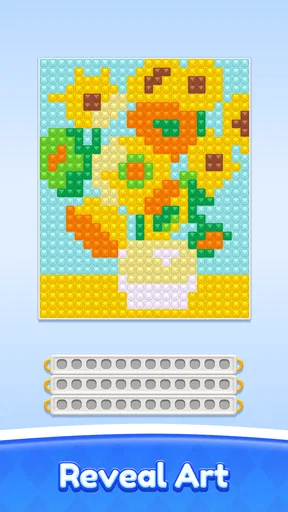

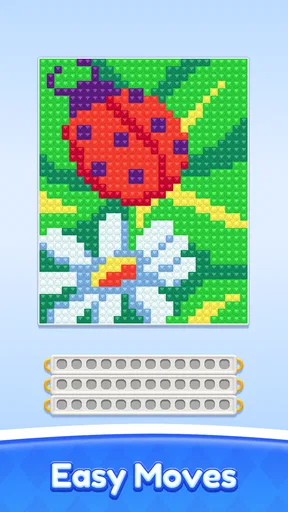

Our Review of Coloring Go!
 Analysis by Appyee
I started Coloring Go! expecting a simple way to pass a few spare minutes, and that is exactly where this casual game feels most comfortable. Its central idea is easy to understand: sort colors, watch the board become more orderly, and keep going when the next puzzle looks just manageable enough to solve. There is no complicated setup to learn, so I could begin playing almost immediately rather than spending time studying rules or menus.
That simplicity is also the game’s main appeal. It is aimed at people who want a quiet puzzle rather than a demanding adventure, competitive action game, or long story-driven experience. I found it especially suitable for short breaks, waiting rooms, and those moments when I wanted something interactive without committing to a large task. The free download makes it easy to try, while optional in-app purchases range from $0.99 to $99.99 per item, so I would pay attention to the purchase prompts if I were handing the device to a child.
How the color-sorting loop feels in practice
I find the color-sorting loop most rewarding when I treat each move as a choice about what I want to keep possible, not just a quick way to make the board look neater. That small shift helps me notice when patience is more useful than immediate progress. The next section looks at how this simple rhythm shapes the game’s appeal—and where its deliberately narrow focus may start to feel limiting.
The first action is deliberately simple
The first thing that matters in a color-sorting game is whether the opening move feels obvious without making the whole experience feel pointless. Here, the basic action is approachable: I look at the mixed colors, identify a sensible destination, and begin arranging them. The pleasure comes from turning visual disorder into a pattern I can understand. That makes the game friendly to newcomers, including players who do not usually spend time with puzzle games.
I like that the opening idea does not require a tutorial-heavy introduction. A player can understand the goal through the board itself. The colors provide immediate visual information, and each move gives a clear sense of whether I am making progress or creating a problem for the next turn. This is a better fit for casual play than a puzzle that hides its rules behind several screens of explanation.
The trade-off is that the lack of complexity may not satisfy someone looking for deep strategy from the first minute. The game’s attraction depends on how much enjoyment I get from organizing, anticipating, and correcting small mistakes. If I need elaborate objectives, character development, or a strong narrative reason to continue, this is not the right choice. Its focus stays on the board and the next useful move.
Feedback gives every move a small purpose
The strongest part of the experience is the rhythm between action and response. I make a sorting move, see the arrangement change, and immediately reassess the remaining colors. That feedback keeps the puzzle active even when the individual action is uncomplicated. I am not merely tapping through a static activity; I am constantly checking whether the new arrangement has opened a path or made the next decision harder.
That rhythm is useful when I am mentally tired. A large puzzle can feel like work after a long day, but a color board gives me a contained problem. I can concentrate on one visible decision at a time. The feedback also helps me learn from a poor move without needing a long explanation. When the board becomes less flexible, I can usually recognize that my earlier choice had consequences and adjust my approach on the next attempt.
One practical tip is to avoid moving the first color that looks convenient. I get better results by scanning the whole board first and asking which move preserves the most options. A nearly completed group can be tempting, but using a space too early may block a color that needs somewhere to go. This small habit changes the game from random tapping into light planning, and it is one reason the loop remains more engaging than a purely decorative coloring activity.
Another useful approach is to treat empty space as a resource rather than simply a destination. When I protect room for a difficult color, later moves become easier to read. This is particularly helpful when several groups look similar at a glance. I also find it worthwhile to pause briefly before committing to a move, because the game rewards seeing the sequence rather than reacting to the most noticeable color.
Why the reward is the completed arrangement
The reward in Coloring Go! is closely tied to completion. Watching a messy arrangement become sorted gives me a clean visual payoff, and the satisfaction is strongest when I have avoided an obvious mistake or recovered from an awkward position. The game does not need a complicated story to make that moment work. The board itself shows the result of my decisions.
This kind of reward suits players who enjoy order, repetition, and gradual improvement. I can finish a puzzle feeling that I have done something precise, even if the session lasted only a few minutes. It is a different pleasure from winning a fast action game: there is less excitement and more relief, with a quiet sense that the problem has finally settled into place.
For me, the best use is as a transition between activities. I might play while waiting for an appointment, after putting down a more demanding game, or during a short break when I do not want to start a film or read a long article. The completed board provides a natural stopping point, which is valuable because it prevents a brief break from automatically becoming a long session.
Still, the reward can feel modest if I want constant novelty. Color sorting is intentionally repetitive, and the satisfaction comes from the process rather than from a large collection of unrelated mechanics. Players who need frequent surprises may eventually prefer a broader puzzle collection or a game with levels built around changing rules. Coloring Go! is more focused, and that focus will either feel calming or limiting depending on what I expect.
Resetting the session without losing the appeal
After a board is complete, the important question is why I would begin another one. In this game, the answer is the same compact challenge in a fresh arrangement. I get another chance to apply what I learned, make cleaner choices, and see whether the next board produces a smoother flow. That reset works because the action is quick to understand, so I do not have to rebuild a complicated mental model each time.
I often decide to play one more puzzle when the previous board ends with a move I could have planned better. The reset becomes a small personal challenge: can I be more careful with open spaces, avoid trapping a color, or recognize the useful sequence earlier? This is a more durable reason to continue than simply chasing noise or constant visual effects. The game invites improvement through repetition, even though the loop remains accessible.
A realistic everyday session might begin with me opening the game during a short commute break. I solve one board while standing around, put the phone away when the task is finished, and later return when I have another few minutes. Because the activity is self-contained, I do not need to remember a story or manage a large inventory. That makes it convenient for fragmented time, although anyone who dislikes repeated short puzzles may find the reset less compelling.
I would also recommend deciding in advance whether the next board is worth continuing before tapping through any purchase-related prompt. The game is free to play, but the presence of optional items priced from $0.99 to $99.99 means the experience should be approached with normal mobile-game spending caution. I would keep purchases protected, especially on a shared family device, and treat the free version as the first test of whether the sorting loop is enjoyable enough on its own.
Where it fits among casual puzzle alternatives
Compared with match-three games, this one feels less dependent on rapid combinations and more dependent on planning the order of actions. I do not approach the board by searching for a flashy chain; I look for a move that keeps the remaining arrangement workable. That makes it a better alternative for someone who wants a calmer, more deliberate puzzle, while match-three games may be preferable for players who enjoy speed, effects, and frequent bursts of action.
It also differs from traditional coloring apps. A coloring app usually emphasizes filling spaces for visual relaxation, whereas the sorting structure here gives me a problem to solve before I reach the satisfying finished image. If I want creative control over colors or a personal art project, I would choose a conventional coloring tool. If I want a small logic exercise with a tidy visual result, this game is the stronger match.
Compared with word puzzles, Coloring Go! demands less language ability. That makes it approachable when I am tired, playing in a second-language environment, or sharing the device with someone who prefers visual tasks. The compromise is that it offers less vocabulary practice and less variety in the type of reasoning involved. A word game is better when I want to learn, recall, or manipulate language rather than organize colors.
Its casual category is therefore accurate in a practical sense. I can play without preparing, stop at a natural point, and return without a major penalty for taking a break. The game is not trying to replace a deep strategy title. Its value lies in making a small amount of attention feel productive without demanding the full concentration of a longer challenge.
Small habits that make the puzzles more enjoyable
I found three habits particularly useful. First, I inspect the board before making the most obvious move. Second, I preserve flexible spaces for colors that have fewer safe destinations. Third, I treat a mistake as information rather than immediately repeating the same sequence. These are simple changes, but they make the difference between feeling stuck and feeling that I am gradually reading the board better.
It also helps to separate a genuine mistake from a board that simply needs patience. Sometimes the correct move does not produce an immediate visual improvement. I try to judge it by the options it leaves behind, not just by whether one group looks tidier right away. That mindset makes the game less frustrating and gives the reset a purpose beyond starting over blindly.
For younger players, the Everyone age rating makes the game broadly approachable, but I would still supervise spending on a shared phone or tablet. The visual sorting concept is easy to explain, and it can become a gentle way to practice observation and sequencing. However, I would not present it as an educational tool first; its main purpose is entertainment, and its learning value comes indirectly through play.
Performance, access, and who should try it
Coloring Go! comes from MAXX GAMES and is available as a free casual game. The current version is 2.1.0, and it requires Android 8.0 or later. That requirement is useful to check before installing on an older device, especially if I am trying to revive a spare phone for simple games. On a compatible Android device, the focused design should appeal to anyone who wants a straightforward color puzzle rather than a large download built around many different systems.
The game has reached over one hundred thousand installs and holds a 4.6 average from around five thousand ratings, which suggests that its uncomplicated approach has found a receptive audience. I would read those figures as evidence of broad interest, not as a guarantee that every player will enjoy the repetition. A high rating cannot change the central fact that the game asks me to like sorting as a recurring activity.
The release date is February 10, 2026, so I would approach it as a relatively fresh option rather than an established classic. That matters if I am comparing it with long-running puzzle games that have years of accumulated content and familiar communities. Coloring Go! is more appealing when I want a direct, uncluttered experience today, not when I need a huge history of modes, guides, or competitive discussion.
I would recommend it to casual players who like visible progress, short sessions, and gentle planning. It is also a good fit for someone who wants a puzzle that can be understood without much reading. I would skip it if I need a rich narrative, multiplayer competition, creative drawing tools, or a constantly changing set of mechanics. Those expectations point toward a different kind of game, and no amount of polishing can make a focused sorting loop serve all of them.
My final view of the repeatable loop
What keeps me returning is the clean sequence: I inspect the colors, make a move, read the result, and gradually turn confusion into order. The reward is visible rather than elaborate, and the reset works because the next board offers a fresh chance to plan more intelligently. That is a modest design, but it is coherent, and I prefer that to a casual game that piles on unrelated features.
The limitations are equally clear. The experience may become repetitive, the challenge depends heavily on enjoying color organization, and optional purchases mean I would use ordinary spending safeguards. It is not the best choice for players seeking deep strategy or broad variety. For the right audience, though, those boundaries are part of the appeal: I know what I am getting, and I can start a small puzzle whenever I want.
My recommendation is to try Coloring Go! when you want a calm, visual sorting game that fits between larger parts of the day. I would begin with the free experience, use the board-reading habits above, and judge it by whether completing one puzzle makes me curious about the next. If that quiet action-feedback-reward-reset cycle feels satisfying, this is an easy game to keep nearby.
Verdict
Strengths of Coloring Go!
- Large selection of coloring pages for different ages and interests.
- Simple controls make coloring accessible for children and beginners.
- Bright interface is easy to navigate on both phones and tablets.
- Coloring activities can provide a relaxing break from daily routines.
- Completed artwork can be saved for later viewing or sharing.
Limitations of Coloring Go!
- Some content or tools may require in-app purchases to unlock.
- The app can become repetitive after extended coloring sessions.
- Ads may interrupt the experience, depending on the installed version.
- Small screen devices can make detailed areas harder to color precisely.
- Performance may vary on older phones or tablets.
Other Releases by MAXX GAMES
View All
Word Solitaire Now!
Word4.6
Similar Picks in This Category
View All
My Talking Angela
Outfit7 Limited4.2

My Talking Tom
Outfit7 Limited4.3

Pou
Zakeh4.2

My Talking Tom 2: Pet Game
Outfit7 Limited4.3

Candy Crush Saga
King4.6

Bridge Race
Supersonic Studios LTD4.1
Frequently Asked Questions
What is Coloring Go! and how does it work?
Coloring Go! is a digital coloring app designed for users who want to relax and create colorful artwork on a mobile device. After opening the app, you can choose an illustration from its available categories, select colors from the palette, and fill different sections by tapping on them. The simple controls make it accessible for both beginners and casual coloring fans.
Is Coloring Go! suitable for children?
Coloring Go! can be suitable for children, especially because its tap-based controls are easy to understand and do not require advanced drawing skills. However, parents should review the app’s content, advertising, privacy settings, and any available purchase options before allowing younger children to use it. Supervision is recommended when the app is installed on a child’s device.
Does Coloring Go! require an internet connection?
The basic coloring experience may work without a constant internet connection, depending on which pages and features have already been downloaded. Nevertheless, an internet connection may be required for displaying advertisements, loading new artwork, accessing online content, or restoring purchases. If offline use is important to you, test the app after disabling Wi-Fi and mobile data.
Are there advertisements or in-app purchases in Coloring Go!?
Coloring Go! may include advertising or optional in-app purchases, as is common with free mobile coloring applications. Ads can sometimes appear between activities or while unlocking additional content, while purchases may provide extra illustrations, colors, or an ad-free experience. Check the store listing and the payment screen carefully before confirming any transaction.
What are the main advantages and limitations of Coloring Go!?
The main advantages of Coloring Go! are its straightforward controls, relaxing gameplay, and accessibility for people who enjoy creative activities without needing drawing experience. It can be a pleasant way to pass time and experiment with colors. Its limitations may include repetitive interactions, locked content, advertisements, and fewer advanced editing tools than professional drawing applications.
Play our best games!


